Raymie Nightingale

Raymie Nightingale. Kate DiCamillo. 2016. Candlewick. 272 pages. [Source: Review copy]

First sentence: There were three of them, three girls. They were standing side by side. They were standing at attention.

Premise/plot: Set in 1975, in Florida, Raymie Nightingale is middle grade novel about everything and nothing all at the same time.

Three girls--Raymie Clarke, Beverly Tapinski, Louisiana Elefante--become the Three Rancheros one summer. Technically, these three are brought together by a couple of 'obvious' things: they are all in a baton-twirling class, they all will be competing in a Little Miss Central Florida Tire competition. One of the questions on the application asks each girl to LIST their good deeds on a separate piece of paper. But the obvious reasons these three belong together aren't the 'real' reasons. Each girl knows something of loss, of longing, of regret, of 'the real world.'

Raymie's quest to do a good deed so she can write it down leads to the start of a not-so-wonderful, wonderful summer. Her good deed--to read to the elderly about FLORENCE NIGHTINGALE--goes horribly wrong. One patient REFUSES to listen, and her spur-of-the-moment good deed to answer the lonely cries of another patient causes her to DROP HER BOOK--HER LIBRARY BOOK--IN A PANICKED DASH.

Raymie seeks help from Louisiana and Beverly....and in return, she pledges to help them.

My thoughts: LOVED THIS ONE. I'm not sure it's BECAUSE OF WINN DIXIE all kinds of magical. But that is because I loved, loved, loved, LOVED that one so very much. It's a GREAT book though. And I really enjoyed all three girls. I really found myself loving Louisiana and her grandmother most of all. I'm not sure why. I just do. Maybe it was Louisiana's duck barrettes? Maybe it was her hope? I don't know. But I love her fiercely. I think I love all three girls actually.

I was confused for the first few chapters, but, eventually everything clicked into place and it was LOVE.

I wouldn't mind a movie adaptation.


© 2016 Becky Laney of Becky's Book Reviews

To Stay Alive

To Stay Alive. Skila Brown. 2016. Candlewick. 304 pages. [Source: Review copy]

First sentence: It is finished.

Premise/plot: I've got two sets of 'two words' that will either compel you to pick this one up or to avoid it. For better or worse. First: DONNER PARTY. Second: VERSE NOVEL.

Mary Ann Graves is the narrator of this historical verse novel. She was nineteen at the start of the journey in the spring of 1846. This one is divided into seasons: spring, summer, fall, winter. Almost all of the poems involve the traveling west and surviving aspect of the pioneer spirit. The landscape and environment do feature in quite a bit. Especially the SNOW.

What this book is not is Little House On the Prairie. This isn't even THE LONG WINTER. People do have tendencies to group books together. That is why I think it is important that DONNER PARTY leap out at you first before you hear of wagon trains, prairies, pioneers, homesteaders, or going west.

My thoughts: There is a bareness to the poems that oddly enough works for me. The narrator does not wear her heart on her sleeve. She's not overly dramatic and sensitive. She doesn't speak of her dreams and feelings and there is absolutely no gushing. (She's no Ann-with-an-e Shirley.)

When I say the poems avoid gushing, I don't mean they are void of description and detail.
The men think they're/ following a trail, a road/ well marked by wheels/ and feet, like a street,/ pointing you/ in the direction you need/ to go. But I know./ We follow a trail of broken things/ tossed from wagons--family heirlooms/ so heavy with memories/ the oxen couldn't pull--/ quilts, spinning wheels, dishes (too much/ dust to see the pattern), wooden bits,/ once part of something rich,/ portraits of great-grandmothers/ who'll spend eternity in the desert,/ watching beasts pull treasures/ while dirty people trail behind.
Some poems are long, descriptive. Others are very short and bare.
this land/ has eaten/ my feet/ chewed them/ ripped them/ cut them/ they bleed/ into land/ that drinks/ them up/ but it is never full
I am so glad I did not read anything about the Donner party as a child when I was obsessed with Laura Ingalls!!!


© 2016 Becky Laney of Becky's Book Reviews

Peppa Pig and the Little Train

Peppa Pig and the Little Train. 2016. Candlewick. 32 pages. [Source: Review copy]

First sentence: Peppa and George are visiting Granny and Grandpa Pig. Bang! Crash! Bang! Bang! "What's that noise?" asks Peppa. "Grandpa Pig is building a surprise for you," says Granny Pig.

Premise/plot: The book is an adaptation of a television episode of Peppa Pig. In this book, Peppa and George are surprised with Gertrude, a miniature locomotive made by their Grandpa. Soon, all their friends are riding Gertrude as well. One of the refrains of the book is that Gertrude is NOT a toy.

My thoughts: I LOVE this episode very much. But the book adaptation leaves a little to be desired. Not only has it been Americanized, but the lyrics to GRANDPA'S LITTTLE TRAIN SONG has been changed for no reason whatsoever. In the TV episode, Grandpa's little train goes CHOO, CHOO, CHOO. In the book, it goes CHUG, CHUG, CHUG. I don't expect the book to include the full song--it has multiple verses after all. But to not get the chorus right is just annoying. Any parent and child who KNOW the show, are going to KNOW the words to the "real song" and want to know WHY the book gets it wrong.

Text: 3 out of 5
Illustrations: 3 out of 5
Total: 6 out of 10

© 2016 Becky Laney of Becky's Book Reviews

Trains

Trains: A Pop-Up Railroad. Robert Crowther. 2016. Candlewick Press. 10 pages. [Source: Review copy]

First sentence: Locomotives. The first trains were just linked mining wagons pulled by human or horse power, used to carry coal and mineral ores back in sixteenth century Europe. The invention of the first powered locomotive in the early nineteenth century revolutionized the way a train moved.

Premise/plot: This is POP-UP book celebrating trains. It is an interactive book. Trains don't just pop-up on a few pages. There are flaps to lift and tabs to pull as well. Above all else, this one is packed with very detailed information.

Did You Know?
  • That Richard Trevithick built the first working steam locomotive in 1804.
  • That British trains began carrying passengers in 1829 and American trains began carrying passengers in 1830.
  • That Dr. Rudolf Diesel built the first diesel engine in 1897. 
  • That George Pullman introduced the first luxury sleeping cars in 1865.
  • That the fastest steam locomotive is/was the Mallard. It set the record in 1938 with 126 mph. The record has never been broken...by another steam train.
  • That the fastest train these days is the Japanese train, Maglev. It can go up to 374 mph!
My thoughts: I liked this one. I'm not a huge train enthusiast. But I know many people--of all ages--are. I think this one is a good and fun resource to have. It isn't so much a narrative to read aloud--there isn't a proper story. But it is a resource: plenty of definitions, explanations, illustrations, and such.


© 2016 Becky Laney of Becky's Book Reviews

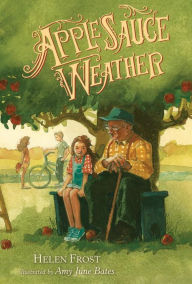
Applesauce Weather

Applesauce Weather. Helen Frost. Illustrated by Amy June Bates. 2016. 112 pages. [Source: Review copy]

First sentence: Today is the day I've been waiting for: the first apple fell from the tree.

Premise/plot: Faith and Peter love, love, LOVE applesauce weather. When the apples are ready to pick from the family's apple tree. Uncle Arthur comes and tells stories--thousands of stories--and it's the best time ever. This year, there's some question though if he will come at all. Though Faith--aptly named Faith--never wavers in her belief that he will come. This year will be the first time for making applesauce WITHOUT Aunt Lucy. Uncle Arthur is still deeply mourning the love of his life. Lucy was someone he knew since he was a child, his best friend and soul mate. Will he come? Will he still tell stories? Or will he be too sad?

My thoughts: I LOVE, LOVE, LOVE this one. Dare I say it's more than practically perfect in every way, that, it is in fact actually perfect in every way?! I love Faith and Peter. I do. I love Uncle Arthur. I love seeing Arthur interact with his great-niece and great-nephew. I love how Arthur tells true stories--of him and Lucy--and more fanciful tales as well. (For example, how he lost his finger.) I love seeing authentic family moments.

It is a verse novel. But Helen Frost excels in this genre. Her verses resonate. One never feels that her verses are chopped up prose. At least I never feel that way. I suppose I should be careful generalizing!

Here's a verse from Uncle Arthur's perspective:

Here comes an old memory
walking down the road,
like a peddler
pushing a heavy load.
I'll walk out to meet him,
see what he has to sell--
a hammer, and a pound
of two-inch nails,
a cooking pot, and
a new tin pail.
Somewhere in the mix,
I might have found
the beginning of a strange
new tale to tell. (48)

© 2016 Becky Laney of Becky's Book Reviews

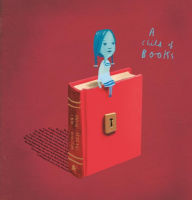
A Child of Books

A Child of Books. Oliver Jeffers. 2016. Candlewick Press. 40 pages. [Source: Review copy]

First sentence: I am a child of books. I come from a world of stories and upon my imagination I float.

Premise/plot: Books are celebrated in Oliver Jeffers' newest picture book. The illustrations are both simple and complex. Many illustrations feature a young girl and boy. Most pages also feature illustrations crafted out of the text of many, many books. For example, a path is created using the text of Alice's Adventures in Wonderland. Or a mountain is created using the text of Peter Pan and Wendy. Or tree branches are created using the text of several fairy tales. Each two-page spread is well-worth an adult's time.

My thoughts: I really liked this one. The narrative itself is beautiful, definitely poetic. I think the narrative is simple enough that it could work as a read aloud for almost any age. (Well, maybe not babies and toddlers and preschoolers with almost nonexistent attention spans.) The illustrations add a lot of depth and complexity. This element would probably be lost for a group read aloud, but, perhaps preserved in reading one on one with a child. Adults could definitely spend a LOT of time looking carefully at every single page. If you've read a lot, you may recognize phrases from the illustrations that 'jump' out at you.

Text: 5 out of 5
Illustrations: 4 out of 5
Total: 9 out of 10

© 2016 Becky Laney of Becky's Book Reviews

Snow White: A Graphic Novel

Snow White. Matt Phelan. 2016. Candlewick. 216 pages. [Source: Review copy]

First sentence: What's the story here? Who is she?

Premise/plot: Those questions are asked by a New York City detective as he examines a crime scene--or potential crime scene at a department store. They provide the framework for Matt Phelan's newest graphic novel, Snow White. The book is a retelling of the traditional tale set in America, in New York City, for the most part, during the Depression.

Instead of an evil Queen of a stepmother, Samantha White (aka Snow) has dealings with the Queen of the Follies. Her stepmother being a Broadway star, a Ziegfeld girl. Instead of seven dwarfs, Snow is saved by THE SEVEN, a gang of street children.

My thoughts: I like this one a lot. I really enjoyed his artwork. I thought while both story and illustration were on the simple, understated side, it worked well for me. While the setting makes this one unique, the story is traditional. No further characterization has been done--for better or worse. I didn't mind this. As I said, it worked for me. I don't have to have "new" and "modern" twists and turns and complications for me to like a fairy tale retelling.

© 2016 Becky Laney of Becky's Book Reviews

Mango & Bambang The Not a Pig

Mango & Bambang: The Not a Pig. Polly Faber. Illustrated by Clara Vulliamy. 2016. Candlewick. 144 pages. [Source: Review copy]

First sentence: Mango Allsorts was good at all sorts of things. That was not the same as being good, but she was that, too. Most of the time.

Premise/plot: Readers meet Mango and her new pet tapir, Bambang. In their first adventure together, "Mango and the Muddle," Mango discovers the not-a-pig tapir causing a lot of traffic problems. She recognizes him for what he is--a tapir and NOT A PIG. And she 'saves' the day, if you will, by removing him from the scene and taking him home with her. Since her father is both there and not-there, the two become quite close. There are four adventures in all. The other three being: "Bambang's Pool," "Bambang Puts On a Hat," and "The Song of the Tapir."

My thoughts: Loved this one. I did. It had a good chance of winning me at hello what with the purple stripes and the purple end pages. The illustrations by Clara Vulliamy were just adorable and perfectly complemented Polly Faber's text. I would definitely recommend this one.

© 2016 Becky Laney of Becky's Book Reviews

The Disappearance of Ember Crow

The Disappearance of Ember Crow. Ambelin Kwaymullina. 2016. Candlewick. 432 pages. [Source: Review copy]

The Disappearance of Ember Crow is the middle book in a trilogy by Ambelin Kwaymullina. The series is The Tribe. How to categorize it? Let's see, definitely post-apocalyptic with supernatural, mystical elements. So if you enjoy world-building, whether science-fiction or fantasy, this series may prove to your liking.

First things first. Can it stand alone? Do you need to have read The Interrogation of Ashala Wolf? It does not stand alone in my opinion. I read the first book and absolutely loved it. It was such a wonderful surprise of a book. So in my opinion, why not recommend starting with the first book when the first book is so GOOD?!?!

With a title like "The Disappearance of Ember Crow," anyone can deduce that Ashala's close friend, Ember, is going to disappear! Essentially, the book is about Ashala and Daniel...and a new character, Jules, setting out to find Ember and rescue her if she needs it.

A good deal of world-building occurs in this one. Enough is left a MYSTERY that readers aren't quite sure what will ultimately happen in the series. But readers can probably predict that Ashala and Daniel's quest to locate Ember will be successful and that these friends will meet again.

Did I enjoy this one as much as the first book? Honestly, probably not, but I am partly to blame for that. I read the first book in two days. Maybe three. I read this sequel in about four weeks. It just could NOT compete with my rereading of The Lord of the Rings. Daniel and Ashala just could not compete with Aragorn, Sam, and Gandalf.

Would I recommend this series? Yes. Just don't pick up this series at the exact same time as LOTR!!! It deserves your full attention.

© 2016 Becky Laney of Becky's Book Reviews

Shrunken Treasures

Shrunken Treasures. Scott Nash. 2016. Candlewick. 40 pages. [Source: Review copy]

Love picture books? Love literature? Love the idea of loving literature? Shrunken Treasures might be just right for you. Here's why: Scott Nash has condensed nine literary works into verse 'for children.' (I'm not absolutely convinced that this one is truly for children, and that it will be appreciated by children.) Am I convinced that it can and will be appreciated by adults? It's much easier to say YES to that one.

So which books are condensed?
  • The Odyssey
  • Frankenstein
  • Moby-Dick
  • Jane Eyre
  • A Thousand and One Nights
  • Hamlet
  • Don Quixote
  • The Metamorphosis
  • Remembrance of Things Past
I believe two of these can be sung to nursery rhyme tunes. Not all were written with singing in mind. The shortest of the condensed works is Remembrance of Things Past.

How "useful" are these condensed stories? (I mean "useful" for students wanting to avoid reading the originals for their school assignments.) Not very! But I'm not complaining about that...at all. Hamlet, for example, is about a dog--a Great Dane--with a habit of digging holes. A Thousand and One Nights stars a tiger and a mouse. Don Quixote covers about one or possibly two chapters of a very, very long novel.

I enjoyed this one. I didn't love, love, love it. I think one thing that kept me from loving it was the fact that I didn't really "like" the illustrations.

© 2016 Becky Laney of Becky's Book Reviews

The Interrogation of Ashala Wolf

The Interrogation of Ashala Wolf. Ambelin Kwaymullina. 2014. Candlewick. 383 pages. [Source: Library]

I loved The Interrogation of Ashala Wolf. I did. (I didn't expect to 'love' it. I didn't know a lot about it going into it, hadn't read a thousand gushing reviews or anything. I would rather be surprised by how good a book is than be disappointed in how bad it is. So my thinking: always try to keep expectations moderately low.)

What you should know: 1) It is YA speculative fiction. I'd say somewhere between dystopian and post-apocalyptic. Post-apocalyptic because it is set hundreds of years after 'the reckoning' that almost destroyed the planet and wiped out humanity. Dystopian because of the ordered--often cruel--society or government that has restructured the world. So if you like or love either genre, then you should pick this one up. 2) It is complex--purposefully, strategically structured to keep you always guessing and a bit unsure. Some people love this, I think; some people don't. I enjoyed it very much! 3) The premise is simple perhaps to make up for the complex storytelling and intense plot. The premise? Well, some people are born with special powers or abilities. These abilities manifest themselves over time, so, you essentially grow into your power/ability. Strength (intensity/power) and control (ability to direct, use at will) vary from person to person. These people are labeled 'illegal' and are targeted by the government. 4) The book is about the conflict between Illegals and the Powers That Be. Questioning Authority and Being True To Yourself are some of the themes explored. 5) I love the world-building. Not everything is explained upfront, and, I love that about it. I don't think everything should be revealed from page one. I like the mystery and suspense and the gradual unfolding of how things are as you orient yourself to Ashala's world. It almost is better because it is slow and gradual. 6) The characterization. Like the world-building, characters aren't nicely introduced in a telling, usual way.

Ashala Wolf is one of the leaders of the tribe, a group of Illegals living in the Firstwood, living on their own as far away from society as they can get. Firstwood is a unique, fantastical setting. I never quite pictured or imagined it fully, but, that didn't stop me from loving this one. It didn't feel "less real" because of that. It almost felt "more real." In the opening chapter, readers learn that she has been captured, perhaps even betrayed by the boy, the young man, that she can't help being drawn to. She's essentially a prisoner at a detention camp, and, because she's a leader, and a defiant leader at that, she most likely is facing torture.

Actually, The Interrogation of Ashala Wolf reminded me of first season Alias. There's intensity, action, and confusion all at the same time. I could just as easily compare it to LOST or Once Upon A Time. You may not know everything you want to know, but, you know just enough to know you want more, more, MORE.


© 2016 Becky Laney of Becky's Book Reviews

Popular Posts

Like us on Facebook

Flickr Images