March: Book One

March: Book One. John Lewis, Andrew Aydin. Illustrated by Nate Powell. 2013. 128 pages. [Source: Library]

First sentence: Can you swim? No. Well, neither can I--but we might have to.

Premise/plot: March is the graphic novel autobiography of John Lewis. So far, there are three volumes in this autobiography. Today, I am reviewing book one. Lewis gives us an incredible behind-the-scenes glimpse of the civil rights movement. This one also has a built-in framework: it is set in 2009, and he's reflecting on his life before attending the Inauguration.

My thoughts: Dare I say this one is a must read? I'm tempted, really tempted. (And if you follow me on the blog and know my tastes inside and out, then you know that I don't usually read graphic novels.)

What I like best about this one is that it is engaging, compelling, emotional, personal, and above all else cohesive. It gives you a truer sense of the 'big picture' of the civil rights movement than any other book I've read--that I can remember at least. (When you read 400+ books a year, I'll be the first to admit that you don't necessarily recall most of them with much detail.)

I also love the amount of detail. (For example, that he used to preach to his chickens!)

I've read the first two books now and I'm excited to begin the third.


© 2016 Becky Laney of Becky's Book Reviews

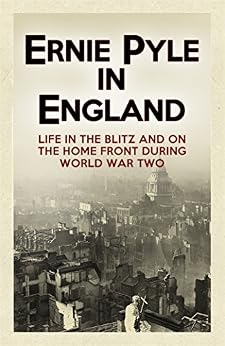
Ernie Pyle in England

Ernie Pyle in England. Ernie Pyle. 1941. 215 pages. [Source: Bought]

First sentence: A small voice came in the night and said, “Go.” And when I put it up to the boss he leaned back in his chair and said, “Go.” And when I sat alone with my so-called conscience and asked it what to do, it pointed and said, “Go.” So I’m on my way to London.

Premise/plot: Ernie Pyle in England was first published in 1941. It gathers together Ernie Pyle's newspaper columns from his time--three or so months--in England (and Ireland and Scotland). (He was an American journalist.) At the time the book was published, America had NOT yet entered the second world war.

My thoughts: WHY DID NO ONE TELL ME THIS BOOK EXISTED?! Seriously. I've gone all these years of my life not knowing about Ernie Pyle?!?!?! This one was a PERFECT fit for me. I love to read about England. (I do. I really do.) And I love to read about World War II. If you love history, this one may prove quite satisfying. And if you love human-interest stories, then this one will certainly satisfy!!!

I found it fascinating, entertaining, compelling, charming.

Quotes:
A ship carries people out of reality, into illusion. People who go away on ships are going away to better things.
Our bathtub has three faucets, one marked cold, and two marked hot. The point is that one is a little hotter than the other. I don’t know why it’s done this way. All I care about is that one or the other should give off hot water; and they really do — plenty hot. But our radiator does not have the same virtue. It is a centuries old custom not to have heat over here. All radiators are vaguely warm; none is ever hot. They have no effect at all on the room’s temperature. I’ve been cold all over the world. I’ve suffered agonies of cold in Alaska and Peru and Georgia and Maine. But I’ve never been colder than right here in this room. Actually, the temperature isn’t down to freezing. And it’s beautiful outside. Yet the chill eats into you and through you. You put on sweaters until you haven’t any more — and you get no warmer. The result is that Lait and I take turns in the bathtub, I’ll bet we’re the two most thoroughly washed caballeros in Portugal. We take at least four hot baths a day. And during the afternoon, when I’m trying to write, I have to let the hot water run over my hands about every fifteen minutes to limber them up. I’m telling the truth.
My new English friends wanted to know what America thought; and they told queer bomb stories by the dozen. “You’re a welcome sight,” they said. “We’ve all told our bomb stories to each other so many times that nobody listens any more. Now we’ve got a new audience.”
London is no more knocked out than the man who smashes a finger is dead. Daytime life in London today comes very close to being normal.
Some day when peace has returned to this odd world I want to come to London again and stand on a certain balcony on a moonlit night and look down upon the peaceful silver curve of the Thames with its dark bridges. And standing there, I want to tell somebody who has never seen it how London looked on a certain night in the holiday season of the year 1940. For on that night this old, old city was — even though I must bite my tongue in shame for saying it — the most beautiful sight I have ever seen. It was a night when London was ringed and stabbed with fire. They came just after dark, and somehow you could sense from the quick, bitter firing of the guns that there was to be no monkey business this night.
And Big Ben? Well, he’s still striking the hours. He hasn’t been touched, despite half a dozen German claims that he has been knocked down. Bombs have fallen around Trafalgar Square, yet Nelson still stands atop his great monument, and the immortal British lions, all four of them, still crouch at the base of the statue, untouched.
Londoners pray daily that a German bomb will do something about the Albert Memorial in Kensington Gardens. If you have ever seen it, you know why.
Apparently the national drink in England is a beef extract called Bovril, which is advertised everywhere, like Coca Cola at home. Yesterday I went into a snack bar for some lunch. I asked the waitress just what this Bovril stuff was, and in a cockney accent that would lay you in the aisle she said: “Why sir, it’s beef juice and it’s wonderful for you on cold days like this. It’s expensive, but it’s body-buildin’, sir, it’s very body-buildin’.” So I had a cup. It cost five cents, and you just ought to see my body being built.
If I were making this trip over again I would throw away my shirts and bring three pounds of sugar. 
You can hardly conceive of the determination of the people of England to win this war. They are ready for anything. They are ready to take further rationing cuts. They are ready to eat in groups at communal kitchens. Even the rich would quit their swanky dining rooms without much grumbling. If England loses this war it won’t be because people aren’t willing — and even ahead of the government in their eagerness — to assume a life of all-out sacrifice.
Don’t tell me the British don’t have a sense of humor. I never get tired of walking around reading the signs put up by stores that have had their windows blown out. My favorite one is at a bookstore, the front of which has been blasted clear out. The store is still doing business, and its sign says, “More Open than Usual.”
One of the few things I have found that are cheaper here than at home is a haircut. I paid only thirty cents the other day in the hotel barbershop, and since then I’ve seen haircuts advertised at fifteen cents. I’m going to get a haircut every day from now on — enough to last me for a year or two.
It was amazing and touching the way the Christmas spirit was kept up during the holidays. People banded together and got up Christmas trees, and chipped in to buy gifts all around. I visited more than thirty shelters during the holidays, and there was not a one that was not elaborately decorated.
I probably wouldn’t have slept a wink if it hadn’t been for the bathroom. I discovered it after midnight, when everybody else had gone to bed. The bathroom was about twenty feet square, and it had twin bathtubs! Yes, two big old-fashioned bathtubs sitting side by side with nothing between, just like twin beds. Twin bathtubs had never occurred to me before. But having actually seen them, my astonishment grew into approval. I said to myself, “Why not?” Think what you could do with twin bathtubs. You could give a party. You could invite the Lord Mayor in for tea and a tub. You could have a national slogan, “Two tubs in every bathroom.” The potentialities of twin bathtubs assumed gigantic proportions in my disturbed mind, and I finally fell asleep on the idea, all my fears forgotten.
It is hard for a Scotsman to go five minutes without giving something a funny twist, and it is usually a left-handed twist. All in all, I have found the Scots much more like Americans than the Englishmen are. I feel perfectly at home with them.
Pearl Hyde is head of the Coventry branch of the Women’s Voluntary Services. It was Pearl Hyde who fed and clothed and cheered and really saved the people of Coventry after the blitz. For more than a week she plowed around in the ashes of Coventry, wearing policeman’s pants. She never took off her clothes. She was so black they could hardly tell her from a Negro. Her Women’s Voluntary Services headquarters was bombed out, so she and her women moved across the street. Her own home was blown up, and even today she still sleeps in the police station. Pearl Hyde is a huge woman, tall and massive. Her black hair is cut in a boyish bob. And she has personality that sparkles with power and good nature. She is much better looking than in the film. And she is laughing all the time. She was just ready to dash off somewhere when I went in to see her, but she tarried a few minutes to tell me how good the Americans had been with donations.
It is against the law to leave a car that could be driven away by the Germans. You have to immobilize your car when you leave it, even though you might be walking only fifty feet away to ask a policeman for directions. In daytime, just locking the doors and taking the key counts as immobilization, but at night you have to take out some vital part, such as the distributor.

© 2016 Becky Laney of Becky's Book Reviews

Fashion Rebels

Fashion Rebels. Carlyn Cerniglia Beccia. 2016. 176 pages. [Source: Review copy]

First sentence: Today, we take for granted that Lady Gaga can wear slabs of meat or Kermit the Frogs affixed to her skin and call it a dress.

Premise/plot: Love fashion? Love history? Love pop culture? Young readers (8+) should find plenty to love in Carlyn Cerniglia Beccia's newest book, Fashion Rebels. After a short premise ("Why Fashion Matters," and a short quiz ("Who is Your Style Icon?"), the journey through history with fashion icons as our guide begins. From history, readers learn about Cleopatra VII, Elizabeth I, Marie Antoinette, Dolley Madison, Coco Chanel, Anna May Wong, Josephine Baker, Katherine Hepburn, Frida Kahlo, Marilyn Monroe, Audrey Hepburn, and Jacqueline Kennedy Onassis. From today, readers learn about Ellen DeGeneres, Madonna, Michelle Obama, Lady Gaga, Michelle Phan, Tavi Gevinson, and more. In addition, there are special articles and activities. For example, readers can read about "The Story of the Little Black Dress" and learn how to "Try a Classic Audrey Hepburn French Twist."

Each chapter is a few pages in length. Each chapter concludes with a style reference page and some general tips. For example, Anna May Style = blunt bangs, exotic eyes, red lipstick and nail polish, and high collars. And Anna May's Style Tips = comb your hair instead of brushing it. Don't wash your hair every day. Massage vegetable oil into scalp and hair (coconut oil is the best) as a conditioner. The book has plenty of information and some inspiration as well.

My thoughts: I really like this one. I do. I think the layout is great. It's a good reference. Readers may not be WOWed by each and every fashion icon. Chances are they'll be drawn to some, and, feel 'meh' about a few. But overall, it's a fun and appropriate fashion guide for young readers. I really love the illustrations.


© 2016 Becky Laney of Becky's Book Reviews

The Grand Tour

The Grand Tour: The Life and Music of George Jones. Rich Kienzle. 2016. 288 pages. [Source: Library]

First sentence: Would he or wouldn't he show up?

Premise/plot: The Grand Tour is a biography of George Jones that seeks to balance a focus on his life and on his music. The author takes on the role of music critic and biographer. In the prologue he explains his approach, "Jones's life and music are inseparable. The music often triumphed even during his worst personal moments. His evolution from twangy imitator to distinctive new voice, from influential vocalist to master of his craft, is as important as his personal failings. Exploring that musical side--how he found songs and recorded them; the perspectives of the public, those involved in creating his records, and Jones himself--is pivotal to understanding the story. I've attempted to take the long view, examining not only his life and the events that shaped him from start to present, but simultaneously exploring his immense musical legacy, all in a clear chronological context." (13)

My thoughts: I started listening to George Jones' music this summer. And what I loved, I really, really LOVED. So I was curious to pick this new biography up at the library. I picked it up as a new fan and not an expert, so perhaps keep that in mind. But I enjoyed this biography very much. I think I might have appreciated aspects of it even more if I was familiar with more of his albums, more of his songs.

The prologue of this one had me hooked. Here is how the author describes Jones' voice: "The voice was raw nerve put to music...Yet above all that was his consummate ability to explore pain, sorrow, heartbreak, and emotional desolation." (9)

It was an often absorbing read full of highs and lows. I would definitely recommend it.

© 2016 Becky Laney of Becky's Book Reviews

Agatha

Agatha: The Real Life of Agatha Christie. 2016. 130 pages. [Source: Library]

First sentence: These novelists will stoop to anything for some attention!

Premise/plot: Agatha: The Real Life of Agatha Christie is a graphic novel for adults and perhaps even young adults, if they have read Christie's mysteries and can't get enough! I would say this one is primarily for fans of Agatha Christie. If you've never read Christie, if you've never met Hercule Poirot and Miss Marple, then this isn't the way to be introduced to them. Trust me. What readers get are snippets of Christie's life.

The graphic novel opens in 1926 with the mysterious disappearance of Agatha Christie. It then flashes back to the beginning, to tell a more traditional life story. The flow of this one is start-and-stop. More like you're flipping through a stack of photographs of a person's life than actually taking the time to read a narrative biography.

One sees Agatha Christie as a writer--haunted in a way by her creations. Hercule Poirot and Miss Marple especially have a way of popping up and interacting with Christie. One also sees her as a world-traveler, a wife, and a mother. One catches the barest of glimpses of Christie during World War I and World War II.

My thoughts: I read the HUGE autobiography of Agatha Christie a year or two ago. I LOVED, LOVED, LOVED, LOVED it. Found it absolutely fascinating. Perhaps a little rambling for those who aren't big readers, but, just about perfect for me. This is very condensed and abbreviated.

That being said, I am glad I read this one. I liked it. I may not have loved, loved, loved it. But it is an entertaining read.

© 2016 Becky Laney of Becky's Book Reviews

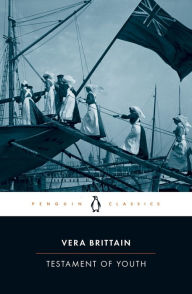
Testament of Youth

Testament of Youth. Vera Brittain. 1933. 688 pages. [Source: Library]

First sentence: When the Great War broke out, it came to me not as a superlative tragedy, but as an interruption of the most exasperating kind to my personal plans.

Premise/plot: In 1933, Vera Brittain published her autobiography, Testament of Youth, which covers the years 1900 to 1925. Much of the book focuses directly on the Great War (aka World War I) and its immediate aftermath. During the war, Vera Brittain left her university studies (Somerville College, Oxford) and became a nurse (V.A.D.). She worked as a nurse in England and abroad. (I believe she nursed in France and Malta.) Many of her friends actively served during the war. And those closest to her--including a brother and a fiance--were killed. She wrote honestly and openly about how brutal and devastating the war was, about how the war changed her and there was no going back after peace was declared.

When the book is not discussing the war, it often turns to education, politics, and social issues. Vera Brittain definitely was a feminist. She had VERY strong opinions on women's rights. But she didn't just speak out and speak up about women. She also was a voice for the poor and working class. She saw a lot of injustice and wanted to change the world.

Vera Brittain loved to be a lecturer or guest-lecturer. She had a LOT to say, and wanted to be HEARD wherever she went. This wasn't always the case. She was unhappy with certain groups--or clubs--that didn't value women's opinions and treat women as intellectual equals.

Also of interest perhaps, Brittain shares her experiences as a writer--her journey to publication and her thoughts on the literary world.

The very last chapter is a relief--after spending so many chapters distancing herself from humanity by focusing on POLITICS and WORLD AFFAIRS--focuses instead on her deep friendships and ultimate marriage. She struggled a lot with the idea of marriage. Can she marry and still be a feminist? Can she marry even though she has every intention of staying a career woman? Can she marry even though children are the very last thing (almost) on her mind? She spent so long speaking out against marriage and traditional roles for women, that she is almost ashamed and embarrassed that she fell in love.

My thoughts: It was REALLY long. Overall, I thought it was slightly uneven. It was at times quite fascinating and compelling, but, then at times it was also quite sluggish and boring. There would be pages that definitely kept me reading and kept me caring. I will say that the movie did a great job condensing the book and capturing the spirit of it. Not that the movie is 100% faithful to the book. (No movie is).

Quotes:
There is still, I think, not enough recognition by teachers of the fact that the desire to think--which is fundamentally a moral problem--must be induced before the power is developed. Most people, whether men or women, wish above all else to be comfortable, and thought is a pre-eminently uncomfortable process; it brings to the individual far more suffering than happiness in a semi-civilized world which still goes to war, still encourages the production of unwanted C3 children by exhausted mothers, and still compels married partners who hate one another to live together in the name of morality. (40)
I am inclined to believe that provincial dances are responsible for more misery than any other commonplace experience. (51)
Most of us have to be self-righteous before we can be righteous. (56)
How curious it seems that letters are so much less vulnerable than their writers! (124)
Even my work-driven uncle at the bank wrote a long letter, enclosing a fragment of philosophy which had recently come to England from the French trenches: "When you are a soldier you are one of two things, either at the front or behind the lines. If you are behind the lines you need not worry. If you are at the front you are one of two things. You are either in a danger zone or in a zone which is not dangerous. If you are in a zone which is not dangerous you need not worry. If you are in a danger zone, you are one of two things; either you are wounded or you are not. If you are not wounded you need not worry. If you are wounded you are one of two things, either seriously wounded or slightly wounded. If you are slightly wounded you need not worry. If you are seriously wounded one of two things is certain--either you get well or you die. If you get well you needn't worry. If you die you cannot worry, so there is no need to worry about anything at all." (306)
It seems to me that the War will make a big division of 'before' and 'after' in the history of the world. (317)


© 2016 Becky Laney of Becky's Book Reviews

Monopolists

The Monopolists. Mary Pilon. 2015. Bloomsbury. 320 pages. [Source: Library]

First sentence: One day during the depths of the Great Depression, an unemployed salesman named Charles Darrow retreated to his basement.

Premise/plot: Love Monopoly? Hate Monopoly? Mary Pilon's The Monopolists is a fascinating read to be sure. Who invented Monopoly? Who did NOT invent Monopoly? Why does it matter?

The Monopolist tells the story of the woman who invented the game, a game with two very different sets of rules. She didn't call her game 'monopoly' but 'The Landlord's Game.' The general game board concept and rules of play were hers. This was in 1904. In her community, it became quite popular, even an obsession of sorts. So much so that it spread across the nation as one person--or one couple--would teach another and another and another and another. People would create their own homemade game boards. The rules were taught but not written down. For decades, people were playing this game, loving this game. It wasn't a game you could buy at the store, though. 'The Landlord's Game' wasn't the only real-estate game that predates Parker Brothers' Monopoly. The game Finance also did. It also being offspring of Lizzie Magie's original game. Though I think perhaps by that time, it had just one set of rules. Charles Darrow, the man whose name would be associated with the game MONOPOLY, was taught the game by friends. He later claimed he invented the game. The couple who taught Darrow spent a lot of time in Atlantic City with the Quakers who LOVED the game and changed their own game boards to reflect their lives. These place names would stay with the game and be the names that we come to associate with Monopoly. The rules, the layout of the game board, the place names, all were essentially handed to Darrow ready-made.

Most of this book focuses on a lawsuit in the 1970s and early 1980s. Parker Brothers was trying to stop one man--Ralph Anspach--from selling his own game, a game called ANTI-MONOPOLY. Anspach was an economics professor, I believe. It would take a lot of time, effort, stamina, and courage to stay in the fight.

My thoughts: I really enjoyed this one. I enjoyed it even more than I thought I would. I don't love playing Monopoly, but, I found the game-playing culture of the twentieth century to be FASCINATING. There is something to be said for people spending time together around a table and actually talking and having fun doing the same thing. This was written in an engaging way. I'd definitely recommend it.

© 2016 Becky Laney of Becky's Book Reviews

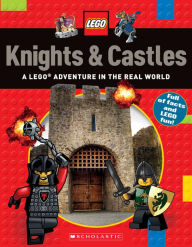
LEGO Knights & Castles

LEGO Knights & Castles. 2016. Scholastic. 64 pages. [Source: Review copy]

Knights and Castles is one of the first books in a Lego-themed nonfiction series published by Scholastic. The series is being marketed as "a Lego adventure in the real world."

What I liked about this one:

I enjoyed the nonfiction narrative. Both the main, flowing narrative that is simple and quick paced. And the overflow of facts found in the text of the side bars, asides, captions, etc. There is plenty of information packed into this one. And it's all appropriate for the elementary audience.

I enjoyed the layout. I liked the use of photographs, illustrations, and bright, bold colors. The book is designed to be appealing to readers. I think it works. It certainly looks nothing like the nonfiction from thirty or forty years ago.

I enjoyed two out of the three Lego features. I enjoyed the "Build it!" and Build it Bigger!" feature. I enjoyed the "Play it!" feature.
p. 15 Build it! Build a tournament area for your jousting knights!
p. 16-7 Play it! Find out about the stories of King Arthur's knights. What amazing adventures will your knights have? Do your knights argue, or are they friends? Is there a wizard in your knight world? Who is your most evil knight?
p. 29 Build it! Build a hospital for the Order of St. John to work in.
While I enjoyed the build it and play it features in Lego Planets, I really LOVED these two features in this one. I also found the narrative to be more compelling. (But that could be my love of history talking!!!)

What I didn't quite enjoy:

The illustrated Lego minifigures. I think there comes a point in your life where you grow up and grow beyond the kind of dialogue that these minifigures engage in. The speech bubbles are heavy on bad jokes and jests. It's just squirmy to read the text as as an adult. Kids, the intended audience, might have a complete different reaction.

© 2016 Becky Laney of Becky's Book Reviews

LEGO Planets

Lego Planets: A Lego Adventure in the Real World. 2016. Scholastic. 64 pages. [Source: Review copy]

Planets is one of the first books in a Lego-themed nonfiction series published by Scholastic. The series is being marketed as "a Lego adventure in the real world."

What I liked about this one:

I enjoyed the nonfiction narrative text. The main narrative text keeps things moving. Just a few sentences per page. Each two-page spread features more text: side bars, charts, captions for photographs, etc.

I enjoyed the layout. Big, bright, bold, colorful photographs.

I enjoyed two out of the three Lego features. Some spreads include a "build it" feature. Other spreads include a "play it" feature.
p. 37 Build it! Your astronauts need a space base. Design a space station. Here are some of the important partss. Solar panels. Living quarters. Docking station. Viewing window. Laboratory. Radiator.
p. 19 Play it! Take your astronauts to the Moon and help them explore. What will they find?
p. 26 Play it! Take your rover and astronauts to Mars! It's a whole new world of adventure. What will they find on the Red Planet? Will they be safe?
What I didn't really like:

I mentioned liking two out of the three lego features of this one. The third feature, the one that predominates the book, is the dialogue between Lego minifigures. These conversations are found in speech bubbles and are heavy on bad jokes. They add no intelligence to the book, in other words.

They are illustrated minifigures, by the way.


© 2016 Becky Laney of Becky's Book Reviews

The Hole Story of the Doughnut

The Hole Story of the Doughnut. Pat Miller. Illustrated by Vincent X. Kirsch. 2016. HMH. 40 pages. [Source: Review copy]

First sentence: Few remember the master mariner Hanson Crockett Gregory, though he was bold and brave and bright. But the pastry he invented more than 166 years ago is eaten daily by doughnut lovers everywhere. This is his story.

Premise/plot: Readers learn the true story behind the creation of the doughnut. Also how that story got embellished through the years into something more of a legend.

My thoughts: I liked it. I really did. I can't say that I loved, loved, LOVED it. But it was lively, engaging, entertaining, not particularly moralistic or educational. I don't remember picture book biographies being this entertaining when I was a child. So it's easy to recommend.

Text: 3.5 out of 5
Illustrations: 4.5 out of 5
Total: 8 out of 10

© 2016 Becky Laney of Becky's Book Reviews

What Are The Summer Olympics

What Are The Summer Olympics?  Gail Herman. Illustrated by Stephen Marchesi. 2016. 112 pages. [Source: Library]

I enjoyed reading Gail Herman's What Are the Summer Olympics? This short little nonfiction book for young(er) readers (think elementary school) covers all the basics. It provides a nice, little overview of the Olympics. Readers don't learn all there is to know about any one sport--or event--but readers learn a little bit about many of the most popular events. The chapters are actually arranged decade by decade. Each chapter typically covers two or three sports.

For example, the ninth chapter focuses on the 1980s. That chapter covers the U.S.A's boycott of the 1980 games, introduces readers to Mary Lou Retton (gymnastics), Carl Lewis (track), and Greg Louganis (diving).

Because over a hundred years worth of sports history is covered in this little volume, there isn't a lot of depth and substance. The book is a little over a hundred pages in length. BUT the book has a lot of illustrations.

Is it as FUN as Horrible Histories' Flame?!?! Sadly, no. But the book and song go VERY well together. The book, of course, covers A LOT more than any song parody could ever do it.

© 2016 Becky Laney of Becky's Book Reviews

Let Your Voice Be Heard

Let Your Voice Be Heard: The Life and Times of Pete Seeger. Anita Silvey. 2016. HMH. 112 pages. [Source: Review copy]

First sentence: Pete Seeger became the most important folk singer of the twentieth and twenty-first centuries. But he might have chosen a very different path. Although his grandfather made a fortune from sugar refining in Mexico, Pete became an advocate for underpaid workers. Though he came from financial privilege, he identified with those who had to make a living. He fought for the oppressed and poor all his life.

Premise/plot: Let Your Voice Be Heard is a biography of Pete Seeger written for children. (I'd say eight to twelve, if I had to put a label on it.) The biography is great at putting Pete Seeger's life into context for better understanding. Perhaps the author wanting to keep this one short and accessible for her audience, did not fully cover his life and music. It is not an exhaustive book on the subject. But a good, basic introduction.

My thoughts: I definitely found this one to be fascinating. I knew next to nothing about Pete Seeger before picking this one up. (I'm certainly no expert in folk music. My only familiarity at all coming from the music of Peter, Paul, and Mary.) I thought it was very well-written.

© 2016 Becky Laney of Becky's Book Reviews

Popular Posts

Like us on Facebook

Flickr Images