Anne of Windy Poplars

Anne of Windy Poplars. L.M. Montgomery. 1936. 288 pages. [Source: Bought]

First sentence:  DEAREST: Isn't that an address! Did you ever hear anything so delicious? Windy Poplars is the name of my new home and I love it. I also love Spook's Lane, which has no legal existence. It should be Trent Street but it is never called Trent Street except on the rare occasions when it is mentioned in the Weekly Courier . . . and then people look at each other and say, 'Where on earth is that?' Spook's Lane it is . . . although for what reason I cannot tell you. I have already asked Rebecca Dew about it, but all she can say is that it has always been Spook's Lane and there was some old yarn years ago of its being haunted. But she has never seen anything worse-looking than herself in it. 

Premise/plot: Anne and Gilbert are engaged at last! But Gilbert still has three years of school to go, and, so Anne finds herself a job as principal of a school in Summerside. Anne of Windy Poplars gives us an intimate look at those three years. Much of the book provides glimpses into the letters Anne writes Gilbert. But there are some traditional chapters as well.

My thoughts: Anne of Windy Poplars is such a delightful (late) addition to the Anne series by L.M. Montgomery. I love, love, love it. Even if Gilbert himself is absent. (We only see her letters to him, never his letters to her.)

This book showcases what Montgomery does BEST: bring her characters to life. It doesn't seem to matter if we spend two paragraphs with a character or two chapters. I CARE about every character she introduces.

Some of the characters we meet in this one: Aunt Kate, Aunt Chatty, Rebecca Dew, Dusty Miller (cats count as characters, right?!), Little Elizabeth, Nora Nelson, Jim Wilcox, Esme Taylor, Dr. Lennox Carter, Cyrus Taylor, Teddy Armstrong, Lewis Allen, Katherine Brooke, Mrs. Adoniram Gibson and Pauline, Cousin Ernestine Bugle, Jarvis Morrow, Dovie Westcott, Frank Westcott.


© 2016 Becky Laney of Becky's Book Reviews

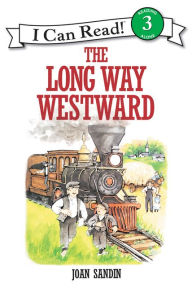
Long Way Westward

The Long Way Westward. Joan Sandin. 1989. 64 pages. [Source: Bought]

First sentence: "Look, Carl Erik," said Jonas, "the streets of America are not paved with gold."

Premise/plot: The Long Way Westward follows a Swedish immigrant family as they travel across parts of the United States to reach their new home in Minnesota. Their travel involves a lot of TRAINS. The immigrant experience of the late nineteenth century is captured quite well in this early chapter book.

My thoughts: It is so nice to have stumbled across historical fiction for the youngest of readers. Historical fiction was probably my first true genre to LOVE, LOVE, LOVE. And I think I would have really enjoyed this one if I'd read it as a kid. As an adult, I can still appreciate it and recommend it to teachers, parents, and grandparents to share with young readers in their lives.

© 2016 Becky Laney of Becky's Book Reviews

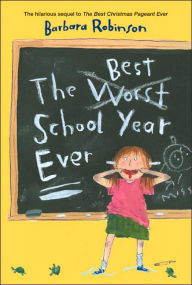
The Worst Best School Year Ever

The Best (Worst) School Year Ever. Barbara Robinson. 1994. 117 pages. [Source: Bought]

First sentence: Unless you're somebody like Huckleberry Finn, the first day of school isn't too bad.

Premise/plot: This book is a sequel to the Best Christmas Pageant Ever. Both books are narrated by a girl named Beth who bear witness to the awfulness of the Herdman family. The book loosely takes place between the first and last days of school. The chapters are more episodic than linked to one another. All focus in on the Herdman family. Some chapters are better than others. I wouldn't say that any were wonderful.

My thoughts: I really LOVE, LOVE, LOVE The Best Christmas Pageant ever. And I think the reason why was that it had a point--a redemptive point. The Herdmans surprised everyone with their humanness, and, they weren't just the town joke when all was said and done. That isn't the case with The Worst Best School Year Ever. While there was one touching moment when Beth, the narrator, noticed Imogene at her best, that alone wasn't enough to make up for all the "let's laugh at the Herdmans." The scene I did like was when Beth noticed the initials on the blanket "returned" to baby Howard. I.H. When Howard lost his blanket--he was the bald baby whose head the Herdmans tattooed with waterproof markers--Imogene gave him her old blanket and pretended it was his that she had found. Only Beth suspected the truth. The first book seemed to end with a fuzzy removal of the "us" and "them" distinction. Not so with this one. And that is disappointing.

© 2016 Becky Laney of Becky's Book Reviews

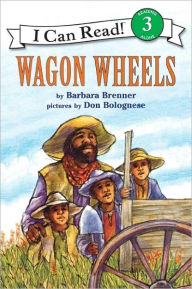
Wagon Wheels

Wagon Wheels. Barbara Brenner. Illustrated by Don Bolognese. 1978. HarperCollins. 64 pages. [Source: Bought]

First sentence: "There it is, boys" Daddy said. "Across this river is Nicodemus, Kansas. That is where we are going to build our house. There is free land for everyone here in the West. All we have to do is go and get it."

Premise/plot: Wagon Wheels is an early chapter book based on a true story. Set in the late 1870s, the book follows the adventures of the Muldie family as they settle in Kansas. First the family settles in Nicodemus, Kansas, a black community. Then the father leaves the boys behind and searches for a better place to settle down and call home, this time near Solomon City. The boys--all on their own--travel to rejoin their father. (The father disliked the flat land and missed trees and hills.)

The book is narrated by Johnny, one of four boys being raised by a widower. The text is simple, and the action is straight-forward. Though simple, it was packed with just the right amount of detail. This book is much, much shorter than any of the Little House books, but, it is just as vivid.

My thoughts: I really liked this one. The edition I picked up is all black-and-white illustrations. I could not tell based on the cover alone that it was a black pioneer family. So I was very pleasantly surprised when I started reading the text to find some diversity. The family--and the community--are saved from starvation by the generosity of Indians--Osage, I believe. Unlike the Little House books, the Indians are portrayed positively. Yes, they are referred to as "Indians" but not savages or redskins or the like.

© 2016 Becky Laney of Becky's Book Reviews

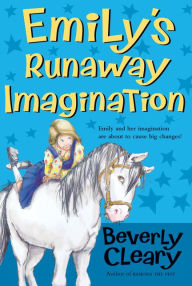
Emily's Runaway Imagination

Emily's Runaway Imagination. Beverly Cleary. 1961. 288 pages. [Source: Bought]

First sentence: The things that happened to Emily Bartlett that year!

Premise/plot: Emily Bartlett is the heroine of Beverly Cleary's Emily's Runaway Imagination. Emily has many adventures or misadventures, many of which center around the formation of the first public library in her town. I would categorize the book as historical fiction. Reference is made to a world war, and, I think it may even be the first world war. One of the adventures involves Emily's grandpa getting a car. And having a car is a novelty in their town. Most people either walk, ride horses, drive a horse and wagon.

My thoughts: I really LOVE this one. If I read this one growing up, I only read it once. It's even possible this is one we didn't own. It took me so long to get to it as an adult because the local library doesn't have a copy of it. I bought this battered copy of it at my local charity shop for a quarter.

Favorite quotes:
"There are still books left to choose from," answered Mama.
And there were! Just think of it, real library books right here in Pitchfork, Oregon. The Dutch Twins, the Tale of Jemima Puddleduck--what a tiny book that was! Emily had not known they made such little books. The Curly-Haired Hen, English Fairy Tales. But no Black Beauty. Oh, well, perhaps another time. Emily chose English Fairy Tales because it was the thickest, and Mama wrote her name on a little card that she removed from a pocket in the book. Emily now had a library book to read. (117)
"Ma'am, is it all right if I get some books for my family?" he asked.
Mama smiled at the boy. "I don't believe I have seen you in Pitchfork before. Do you live in the country?"
"No, ma'am. I live in Greenvale," he answered. "We read about the library in the Pitchfork Report and I walked down the railroad track to see if we could get some books too."
"Why, that's at least four miles," said Mama, "and four miles back again."
The boy looked at the floor. "Yes ma'am."
"Of course you may take books for your family," said Mama. This boy wanted to read. That was enough for her. It made no difference where he lived. (118)


© 2016 Becky Laney of Becky's Book Reviews

Amigo

Amigo. Byrd Baylor. Illustrated by Garth Williams. 1963. 48 pages. [Source: Bought]

First sentence: His mother said, "Come Francisco, my son. Tell me why your eyes are sad, my little one."

Premise/plot: Amigo is written in verse. It is historical fiction--about a boy longing for a dog. His family can't afford an actual dog, but, his parents encourage him to tame something wild, something that can take care of itself, something like a prairie dog. So Francisco sets out to tame a prairie dog, and, he knows just what he'll call it: Amigo. That's half the story. Amigo is a prairie dog that is curious and longs for adventures. He's drawn to humans, and he longs to tame a boy. Amigo picks out just the boy to tame, and, surprise, surprise, it's Francisco. Readers in on both sides of the stories can predict where this one is heading. It's cute.

My thoughts: I'll be honest: I bought it for the art. The illustrations are by Garth Williams. I thought if the text was nice, it would be an extra bonus. But really, I was just happy to see more of Garth Williams' work. I did enjoy the text. Do I think it's the most wonderful, amazing story ever? Probably not. I would have enjoyed more prose and less verse. But it's not awful.


© 2016 Becky Laney of Becky's Book Reviews

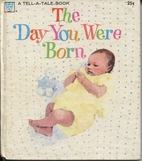
The Day You Were Born

The Day You Were Born. Evelyn Swetnam. Illustrated by Muriel Wood. 1971. 30 pages. [Source: Bought]

First sentence: Do you remember the day you were born? Do you remember how you felt? First, you were safe and small, growing in a special place inside your mother, and getting ready for the world. You could stand on your head in there and kick and turn and never be afraid. Sometimes you heard noises from the outside world--music, voices, a bang, or a bell. You wondered about them. But you had some more growing to do before you could find out for yourself. Soon you were ready to be born.

Premise/plot: The book chronicles a baby's first day. For the most part, I'd say it has a hospital setting. Baby is introduced to doctors, nurses, a mother, a father, etc. So many "firsts."
The nurse took you to your mother. Your mother reached out her arms and held you close. She was very happy. She undressed you, and looked at you, and played with your fingers and your toes. She hugged you and gave you a kiss. It was your first kiss. You liked it. You liked her, too.
My thoughts: I definitely had this one. I really like it. It reminds me of the beginning of Inside Out.

Text: 4 out of 5
Illustrations: 3 out of 5
Total: 7 out of 10


© 2016 Becky Laney of Becky's Book Reviews

The Crate Train

The Crate Train. Dorothy Z. Seymour. 1966. 25 pages. [Source: Bought]

First sentence: Dot and Pat played train. They played in the basement. They had some old crates. They made the train out of crates.

Premise/plot: Dot, Pat, and Baby Sam play together in the basement. Are they playing well together? Well, that's debatable. Perhaps because they are in the basement instead of upstairs, they have the freedom to argue more with each other? Each kid wants to boss the others around and dictate HOW they play train. Except for Baby Sam, I think I would get tired of Pat and Dot pretty quickly in real life.

My thoughts: This is a very, very simple book. I think the activity itself would be great fun--playing train using empty crates. Do I think reading about it is as fun as doing it? Not really.

The Crate Train is one of the books in the Early-Start Preschool Reader series. I much prefer Ann Likes Red and Ballerina Bess.

Text: 3 out of 5
Illustrations: 3 out of 5
Total: 6 out of 10
© 2016 Becky Laney of Becky's Book Reviews

Ballerina Bess

Ballerina Bess. Dorothy Jane Mills and Dorothy Z. Seymour. 1965. 25 pages. [Source: Bought]

First sentence: This is Bess. Bess wants to dance. Bess wants to be a ballerina.

Premise/plot: Young readers meet Bess who wants to be a ballerina. Ballerina Bess is from the Early-Start Preschool Reader series. It has a 25 word vocabulary.

My thoughts: I had this one and Ann Likes Red growing up. While I think I prefer Ann Likes Red a little better, this one is still a lot of fun if you like vintage children's books. (It was published in 1965.)

Simple can be a great thing when you are learning to read. Words need to be either sight words (common frequency like is, was, the, this, etc.), or easy to sound out. To read a whole book on your own can be a great confidence booster.

One thing that I just noticed now as an adult is that there are a few pages where LEGS are missing. On one page readers clearly see Bess dancing ON HER TOES. And on the very next page, Bess is missing BOTH LEGS as she's shopping at a store. The sales clerk has legs, but Bess and her mother DO NOT. And on the next page. Bess, her mom, and the sales clerk are all missing legs. But fortunately Bess' legs return for the next page when she's dancing once more.

Text: 4 out of 5
Illustrations: 3 out of 5
Total: 7 out of 10

© 2016 Becky Laney of Becky's Book Reviews

Popular Posts

Like us on Facebook

Flickr Images