Because of Thursday

Because of Thursday. Patricia Polacco. 2016. Simon & Schuster. 40 pages. [Source: Review copy]

First sentence: Thursdays had always been lucky for Annie Fetlock. She was born on a Thursday. She won her first cooking contest at the age of eight on a Thursday. She met the love of her life, Mario, on a Thursday. They were married on a bright Thursday afternoon, and their two children were each born on a Thursday. One in June and the other in July. It was actually on a Thursday that Annie and Mario opened their diner together. And it was on a Thursday that Annie made her signature creation. A splendid pasta salad.

Premise/plot: I'm tempted to say there are two kinds of people in the world: those who love Patricia Polacco, and those who don't. If you've read Polacco, chances are, you'll know exactly what I mean. Her picture books tend to be for older readers, have a LOT of text, and tell wonderful, heartfelt, emotionally compelling STORIES. Not every Polacco is a tear-jerker. But. More often than not, she gives readers stories and characters worth thinking about. She doesn't go for the quick laugh or the word pun.

Annie Fetlock is the heroine of Because of Thursday. The first two or three pages fly readers through the first sixty or so years of her life. And then, the story begins...

My thoughts: If you love cats, I think you HAVE to read this one. While the title could be "Because of Thursday" for a couple of reasons, I'm going to go with the CAT. I really love how Thursday (the cat) really, truly brought joy into her life again and changed all her luck, if you will.

Who else should read this one? If you love COOKING or EATING or watching the Food Network.

Note to everyone: DON'T FORGET THIS ONE FOR THE 2017 CYBILS.

Text: 5 out of 5
Illustrations: 5 out of 5
Total: 10 out of 10


© 2016 Becky Laney of Becky's Book Reviews

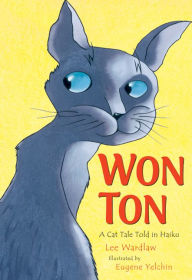
Won Ton: A Cat Tale Told in Haiku

Won Ton. Lee Wardlaw. Illustrated by Eugene Yelchin. 2011. 40 pages. [Source: Library]

First sentence: Nice place they got here. Bed. Bowl. Blankie. Just like home! Or so I've been told.

Premise/plot: Won-Ton (not his *real* name) is a shelter cat who's been adopted by a young boy. The book tells--in verse--what happens next. If you love cats, then this one is a real treat. For example:
Your tummy, soft as/ warm dough. I kneed and kneed, then/ bake it with a nap.
or
I explained it loud/ and clear. What part of "meow"/ don't you understand?
or
Sorry about the/ squish in your shoe. Must've/ been something I ate.
My thoughts: I do love cats. (Even though I'm allergic.) And this picture book alternates being cute and funny. I definitely enjoyed it.

Text: 4 out of 5
Illustrations: 4 out of 5
Total: 8 out of 10


© 2016 Becky Laney of Becky's Book Reviews

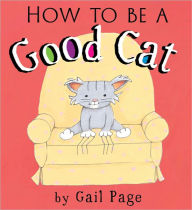
How to Be A Good Cat

How To Be A Good Cat. Gail Page. 2011. Bloomsbury. 32 pages. [Source: Review copy]

First sentence: Bobo was good. He liked to help. So when Mr. Hiccup asked Mrs. Birdhead if someone could look after his kitten, Bobo volunteered!

Premise/plot: Bonkers, the neighbor's kitten, IS very, very naughty. Bobo has quite a time trying to keep up with him. When Bobo stops treating him like a dog, and, instead seeks to learn ALL ABOUT CATS (from a cat), things improve. He learns how to sneak, how to chat, how to stretch, how to clean himself, how to climb...

My thoughts: I liked this one. Bonkers is quite adorable. A perfectly cute and sweet-looking gray and white kitten. Of course, readers learn that he's not quite as innocent as he appears. But it's fun to read about these two.

Do I love the illustrations? I can't say that I do. Oh, I definitely loved Bonkers, and how he's illustrated. Some quite expressive illustrations!!! But there is something about how Bobo is drawn--he's almost always, always on two legs instead of four. He doesn't look like a dog. He looks like a human in a dog costume. And that, for some reason, bothers me. Also, the cat who teaches Bobo how to act like a cat walks on two legs. And it's just unnatural looking.

Text: 5 out of 5
Illustrations: 2 out of 5
Total: 7 out of 10


© 2016 Becky Laney of Becky's Book Reviews

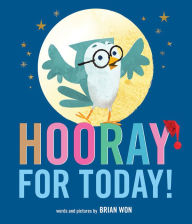
Hooray for Today

Hooray for Today! Brian Won. 2016. HMH. 40 pages. [Source: Review copy]

First sentence: "I'm wide awake and ready to play!" said Owl. "This will be a good, good day."

Premise/plot: Owl is ready to start the day. The problem? Owl's "day" is actually night. And all of Owl's friends are asleep--or about to asleep. Owl is frustrated and sad that no one wants to PLAY.

My thoughts: I liked this one. I didn't like it the first time I read it, however. I needed to meet Owl and friends properly by reading Hooray for Hat! Once I got 'attached' to the characters I went back to read Hooray for Today and liked it much, much better. My advice? Read both books.

Text: 3 out of 5
Illustrations: 3 out of 5
Total: 6 out of 10

© 2016 Becky Laney of Becky's Book Reviews

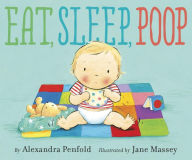
Eat, Sleep, Poop

Eat, Sleep, Poop. Alexandra Penfold. Illustrated by Jane Massey. 2016. Random House. 40 pages. [Source: Review copy]

First sentence: I haven't been here very long. But I already have a rigorous schedule.

Premise/plot: This picture book is narrated by a baby. When the book opens, the baby is very new indeed. But by the end of the book, he's sitting on his own, crawling, grabbing and learning, eating in a high chair, and drinking from a sippy cup. As to his schedule, well, the title says it ALL.

My thoughts: Loved this one. Loved it. The text is simple enough, and the premise is straightforward. But the illustrations say a lot--just as much as the text itself. For example, the opening pages show the parents arriving home with baby. Grandpa and Grandma are on hand. The first 'eat' shows the Mom giving the baby a bottle. The first 'sleep' shows Grandpa getting to hold the sleeping baby while the Grandma snaps LOTS of pictures, and the new mom sleeps as well. The first 'poop' shows the Grandpa quickly handing off the baby because he now stinks. Even the dog looks uncomfortable at the 'new' smell. Each 'eat' 'sleep' and 'poop' shows the progression of growth in the baby's first year.

Text: 5 out of 5
Illustrations: 5 out of 5
Total: 10 out of 10


© 2016 Becky Laney of Becky's Book Reviews

Dog Loves Counting

Dog Loves Counting. Louise Yates. 2013. Random House. 32 pages. [Source: Review copy]

First sentence: Dog loved books. He loved reading them late into the night and didn't like to leave them for long.

Premise/plot: Dog knows he should go to bed, but, he's having trouble falling to sleep. He decides to count something--not sheep--to help him sleep. So he opens a book, finds himself inside, of course--Dog gets lost in books, becoming part of the action--and starts to find things to count. He makes friends too, of course.

My thoughts: Of the three books, this is my least favorite. I still love Dog as a character. And I can even relate to not wanting to put down his book and go to bed. But as an adult reader, I can't really lose myself in a book that focuses on counting from one to ten and back again. I just can't. For young children, of course, this one is still recommended. But it feels more 'educational' than the previous two in the series.

Text: 3 out of 5
Illustrations: 3 out of 5
Total: 6 out of 10

© 2016 Becky Laney of Becky's Book Reviews

Dog Loves Drawing

Dog Loves Drawing. Louise Yates. 2012. 32 pages. [Source: Review copy]

First sentence: Dog loved books. He loved books so much that he opened his own bookshop.

Premise/plot: Dog receives a package from his Aunt Dora. It is a blank sketch book. Dog knows just what to do: he grabs his drawing supplies and draws a door. Not wanting to be alone, he draws some friends: a stick man and a duck. His drawings soon start drawing too. Soon they are joined by an owl and a crab. It is Owl's idea to go on an outing--and it is with the outing that the ADVENTURE begins. (They start out on a train...) Soon Dog's sketchbook is FULL.

My thoughts: I enjoyed this one very much. I thought it was fun, playful, creative, charming. I really enjoyed all the drawing adventures. It is, of course, a bit like Harold and the Purple Crayon. I really enjoyed the characterization and the action. For example, "While the duck was arguing with the others about who should drive, the stickman drew himself a driver's hat, scribbled some steam, and...they were off!" I love seeing Dog and Duck argue! The expressions on the crab and owl are pretty priceless as well.

Text: 5 out of 5
Illustrations: 5 out of 5
Total: 10 out of 10

© 2016 Becky Laney of Becky's Book Reviews

Dog Loves Books

Dog Loves Books. Louise Yates. 2010. 32 pages. [Source: Review copy]

First sentence: Dog loved books. He loved the smell of them, and he loved the feel of them. He loved everything about them...

Premise/plot: Dog loves books so much that he decides to open a bookstore. Initially disappointed that no one comes to his store, he begins to lose himself in the books he reads. He forgets that he's alone. The story ends with his first real customer. Dog knows just what books to recommend because if there's one thing he loves as much as reading, it is sharing what he reads with others.

My thoughts: I really liked this one. Dog is a character I can relate to easily. I also love to read. Books have always helped me to forget that I was alone. And sharing books? Probably one of the best things ever.

Text: 5 out of 5
Illustrations: 3 out of 5
Total: 8 out of 10

© 2016 Becky Laney of Becky's Book Reviews

What is a Child?

What is a Child? Beatrice Alemagna. 2016. Tate. 36 pages. [Source: Review copy]

First sentence: A child is a small person. They are only small for a little while, then they grow up. They grow without even thinking about it. Slowly and silently, their body grows taller. A child is not a child forever. One day, they change.

Premise/plot: "What is a Child?" That is the question asked and answered by author, Beatrice Alemagna. Her answers are thoughtful, and, at times poetic. She definitely takes the question seriously.

My thoughts: I really found myself loving the text. Here's a phrase that caught me: "The children who decide not to grow up will never grow up. They keep a mystery inside them." And another, "Children want to be listened to with eyes wide open."

While I loved the text, I didn't love the illustrations.

Text: 5 out of 5
Illustrations: 2 out of 5
Total: 7 out of 10

© 2016 Becky Laney of Becky's Book Reviews

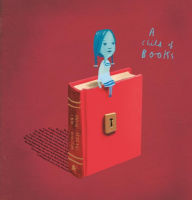
A Child of Books

A Child of Books. Oliver Jeffers. 2016. Candlewick Press. 40 pages. [Source: Review copy]

First sentence: I am a child of books. I come from a world of stories and upon my imagination I float.

Premise/plot: Books are celebrated in Oliver Jeffers' newest picture book. The illustrations are both simple and complex. Many illustrations feature a young girl and boy. Most pages also feature illustrations crafted out of the text of many, many books. For example, a path is created using the text of Alice's Adventures in Wonderland. Or a mountain is created using the text of Peter Pan and Wendy. Or tree branches are created using the text of several fairy tales. Each two-page spread is well-worth an adult's time.

My thoughts: I really liked this one. The narrative itself is beautiful, definitely poetic. I think the narrative is simple enough that it could work as a read aloud for almost any age. (Well, maybe not babies and toddlers and preschoolers with almost nonexistent attention spans.) The illustrations add a lot of depth and complexity. This element would probably be lost for a group read aloud, but, perhaps preserved in reading one on one with a child. Adults could definitely spend a LOT of time looking carefully at every single page. If you've read a lot, you may recognize phrases from the illustrations that 'jump' out at you.

Text: 5 out of 5
Illustrations: 4 out of 5
Total: 9 out of 10

© 2016 Becky Laney of Becky's Book Reviews

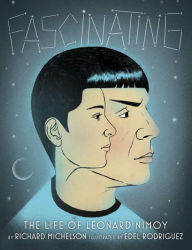
Fascinating: The Life of Leonard Nimoy

Fascinating: The Life of Leonard Nimoy. Richard Michelson. Illustrated by Edel Rodriguez. 2016. 40 pages. [Source: Review copy]

First sentence: Lenny took a deep breath and looked out at the playhouse stage.

Premise/plot: Richard Michelson has written a picture book biography of Leonard Nimoy. The book opens in 1939 with a young Lenny preparing to sing "God Bless America" at a talent show. He was the son of Russian immigrants--Jewish, and raised so. In fact, his inspiration for the Vulcan hand gesture--live long and prosper--came from a priestly blessing.

Readers learn about his interest in photography and acting. Both would be life-long pursuits and interests.

The book closes with Leonard Nimoy taking on the role of Spock and making it truly his own. The last illustrated spread depicts the first use of the "live long and prosper" from the episode Amok Time.

The next two pages fill out the rest of his life. He was an actor and a director. He was a photographer who displayed his photographs for the public, and, in fact published them as works of art. He was also an author.

The end brings a smile to my face. Before he left home, his mother encouraged him to learn to play the accordion. Acting jobs may come and go, she warned. But musicians can find a way to work. The book ends, "But he never did learn to play the accordion."

My thoughts: I LOVED this one so much. I thought it was very charming and well written. I did indeed find it fascinating. The author's note was great. I love that this book was written by one of Leonard Nimoy's close friends. I loved the personal touch--knowing that Nimoy read and approved of the project.

Text: 5 out of 5
Illustrations: 5 out of 5
Total: 10 out of 10

© 2016 Becky Laney of Becky's Book Reviews

B is for Big Ben

B is for Big Ben. Pamela Duncan Edwards. 2016. 32 pages. [Source: Library]

First sentence: A is for the Anglo-Saxons...

Premise/plot: The book is an alphabet book for a much, much older audience. The "main" narrative perhaps is simple enough that it could be read aloud to elementary students. But each page has paragraphs of side text that are weighty indeed. This information would not be of interest to say, first graders or second graders, and perhaps even of limited appeal to older children, say fourth and fifth graders. Emphasis on limited: there will always be readers--no matter their age--who do love HISTORY and are interested in CULTURE.

My thoughts: Well, I really wanted to love this one. I did. I didn't dislike it by any means. I preferred the weighty "side" text that is packed with a LOT of information. I was not overly impressed by the alphabet side of it. For example, "F is for Famous Folk." It goes on in poetic form to add: "There have been many famous people from England through the years--many artists, poets, and writers, scientists, and engineers." Now in the aside, readers learn about Jane Austen, Charles Dickens, Charles Kingsley, William Wordsworth, Beatrix Potter, Winston Churchill, Florence Nightingale, Emmeline Pankhurst, Charles Darwin, Isaac Newton, Margaret Thatcher, Queen Victoria, and Robert Scott.

Some of the choices seemed both random and generic. (For example: "Historic Sites" and "Famous Folk." Others seem to be specific and meaningful. (For example, "London," "Guy Fawkes," "Domesday Book," "William Shakespeare," and "Union Jack.")

I found it very informative. But I'm not sure how kids would really respond to it.

Text: 3 out of 5
Illustrations: 4 out of 5
Total: 7 out of 10

© 2016 Becky Laney of Becky's Book Reviews

Swallow the Leader

Swallow the Leader. Danna Smith. Illustrated by Kevin Sherry. 2016. HMH. 32 pages. [Source: Review copy]

First sentence: 1 Fish 2 Fish Follow the leader. Do as I do. Splash when I'm splashing, then I'll follow you.

Premise/plot: Swallow the Leader is an ocean-themed counting book. The fish in the ocean are playing follow the leader. Perhaps because the fish are busy playing together, they are less aware of their surroundings than they should be. But all ends well in this one--for better or worse.

My thoughts: I haven't decided if I like the ending or not. Is that cruel of me? I like this one okay. But I'm not sure I love it.

Text: 3 out of 5
Illustrations: 3 out of 5
Total: 6 out of 10

© 2016 Becky Laney of Becky's Book Reviews

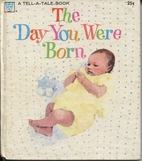
The Day You Were Born

The Day You Were Born. Evelyn Swetnam. Illustrated by Muriel Wood. 1971. 30 pages. [Source: Bought]

First sentence: Do you remember the day you were born? Do you remember how you felt? First, you were safe and small, growing in a special place inside your mother, and getting ready for the world. You could stand on your head in there and kick and turn and never be afraid. Sometimes you heard noises from the outside world--music, voices, a bang, or a bell. You wondered about them. But you had some more growing to do before you could find out for yourself. Soon you were ready to be born.

Premise/plot: The book chronicles a baby's first day. For the most part, I'd say it has a hospital setting. Baby is introduced to doctors, nurses, a mother, a father, etc. So many "firsts."
The nurse took you to your mother. Your mother reached out her arms and held you close. She was very happy. She undressed you, and looked at you, and played with your fingers and your toes. She hugged you and gave you a kiss. It was your first kiss. You liked it. You liked her, too.
My thoughts: I definitely had this one. I really like it. It reminds me of the beginning of Inside Out.

Text: 4 out of 5
Illustrations: 3 out of 5
Total: 7 out of 10


© 2016 Becky Laney of Becky's Book Reviews

My Cat Copies Me

My Cat Copies Me. Yoon-duck Kwon. 2007. Kane/Miller. 40 pages. [Source: Review copy]

First sentence: My cat copies me. We tunnel under newspapers, and crouch behind doors. If I hide under the desk, or in the closet, she hides with me.

Premise/plot: A young girl loves, loves, loves her cat. The book shows the two interacting with each other--copying each other. It's a sweet, must-have for cat-lovers.

My thoughts: I absolutely LOVE, LOVE, LOVE this one. It's one of my favorite picture books that I've discovered since I began blogging ten years ago. I love the writing. I love the illustrations. I love that the first half shows the cat copying the girl, and that the second half shows the girl copying the cat.

Text: 5 out of 5
Illustrations: 5 out of 5
Total: 10 out of 10


© 2016 Becky Laney of Becky's Book Reviews

The Crate Train

The Crate Train. Dorothy Z. Seymour. 1966. 25 pages. [Source: Bought]

First sentence: Dot and Pat played train. They played in the basement. They had some old crates. They made the train out of crates.

Premise/plot: Dot, Pat, and Baby Sam play together in the basement. Are they playing well together? Well, that's debatable. Perhaps because they are in the basement instead of upstairs, they have the freedom to argue more with each other? Each kid wants to boss the others around and dictate HOW they play train. Except for Baby Sam, I think I would get tired of Pat and Dot pretty quickly in real life.

My thoughts: This is a very, very simple book. I think the activity itself would be great fun--playing train using empty crates. Do I think reading about it is as fun as doing it? Not really.

The Crate Train is one of the books in the Early-Start Preschool Reader series. I much prefer Ann Likes Red and Ballerina Bess.

Text: 3 out of 5
Illustrations: 3 out of 5
Total: 6 out of 10
© 2016 Becky Laney of Becky's Book Reviews

Ballerina Bess

Ballerina Bess. Dorothy Jane Mills and Dorothy Z. Seymour. 1965. 25 pages. [Source: Bought]

First sentence: This is Bess. Bess wants to dance. Bess wants to be a ballerina.

Premise/plot: Young readers meet Bess who wants to be a ballerina. Ballerina Bess is from the Early-Start Preschool Reader series. It has a 25 word vocabulary.

My thoughts: I had this one and Ann Likes Red growing up. While I think I prefer Ann Likes Red a little better, this one is still a lot of fun if you like vintage children's books. (It was published in 1965.)

Simple can be a great thing when you are learning to read. Words need to be either sight words (common frequency like is, was, the, this, etc.), or easy to sound out. To read a whole book on your own can be a great confidence booster.

One thing that I just noticed now as an adult is that there are a few pages where LEGS are missing. On one page readers clearly see Bess dancing ON HER TOES. And on the very next page, Bess is missing BOTH LEGS as she's shopping at a store. The sales clerk has legs, but Bess and her mother DO NOT. And on the next page. Bess, her mom, and the sales clerk are all missing legs. But fortunately Bess' legs return for the next page when she's dancing once more.

Text: 4 out of 5
Illustrations: 3 out of 5
Total: 7 out of 10

© 2016 Becky Laney of Becky's Book Reviews

The Hole Story of the Doughnut

The Hole Story of the Doughnut. Pat Miller. Illustrated by Vincent X. Kirsch. 2016. HMH. 40 pages. [Source: Review copy]

First sentence: Few remember the master mariner Hanson Crockett Gregory, though he was bold and brave and bright. But the pastry he invented more than 166 years ago is eaten daily by doughnut lovers everywhere. This is his story.

Premise/plot: Readers learn the true story behind the creation of the doughnut. Also how that story got embellished through the years into something more of a legend.

My thoughts: I liked it. I really did. I can't say that I loved, loved, LOVED it. But it was lively, engaging, entertaining, not particularly moralistic or educational. I don't remember picture book biographies being this entertaining when I was a child. So it's easy to recommend.

Text: 3.5 out of 5
Illustrations: 4.5 out of 5
Total: 8 out of 10

© 2016 Becky Laney of Becky's Book Reviews

Shrunken Treasures

Shrunken Treasures. Scott Nash. 2016. Candlewick. 40 pages. [Source: Review copy]

Love picture books? Love literature? Love the idea of loving literature? Shrunken Treasures might be just right for you. Here's why: Scott Nash has condensed nine literary works into verse 'for children.' (I'm not absolutely convinced that this one is truly for children, and that it will be appreciated by children.) Am I convinced that it can and will be appreciated by adults? It's much easier to say YES to that one.

So which books are condensed?
  • The Odyssey
  • Frankenstein
  • Moby-Dick
  • Jane Eyre
  • A Thousand and One Nights
  • Hamlet
  • Don Quixote
  • The Metamorphosis
  • Remembrance of Things Past
I believe two of these can be sung to nursery rhyme tunes. Not all were written with singing in mind. The shortest of the condensed works is Remembrance of Things Past.

How "useful" are these condensed stories? (I mean "useful" for students wanting to avoid reading the originals for their school assignments.) Not very! But I'm not complaining about that...at all. Hamlet, for example, is about a dog--a Great Dane--with a habit of digging holes. A Thousand and One Nights stars a tiger and a mouse. Don Quixote covers about one or possibly two chapters of a very, very long novel.

I enjoyed this one. I didn't love, love, love it. I think one thing that kept me from loving it was the fact that I didn't really "like" the illustrations.

© 2016 Becky Laney of Becky's Book Reviews

The Wildest Race Ever

The Wildest Race Ever. Meghan McCarthy. 2016. Simon & Schuster. 48 pages. [Source: Library]

First sentence: The first Olympic marathon held in America happened on August 30, 1904, in Saint Louis, Missouri.

Premise/plot: This nonfiction picture book tells the wild-but-true story of the first Olympic marathon. McCarthy introduces us to ten runners out of the thirty-two that started the race. This story has plenty of twists and turns. It's never dull!

My thoughts: I really enjoyed this one. It appears to be well-researched. A select bibliography is included. And a link is provided for a full bibliography. It is well-written in my opinion! The story is lively and fun. I really liked the end papers!

It is probably best suited for slightly older readers. (Elementary perhaps instead of preschool.) It might make for a slightly awkward group read-aloud because there are a lot of sidebars and such in addition to the main narrative.

Text: 5 out of 5
Illustrations: 3 out of 5
Total: 8 out of 10

© 2016 Becky Laney of Becky's Book Reviews

Popular Posts

Like us on Facebook

Flickr Images