The Silent Cry

The Silent Cry. Anne Perry. 1998. 368 pages. [Source: Bought]

First sentence: John Evan stood shivering as the January wind whipped down the alley.

Premise/plot: The Silent Cry is the eighth book in the William Monk mystery series by Anne Perry. (Perry has two ongoing Victorian mystery series.) While some books in the series have been disturbing and violent, this one seems even more so. Think of it as historical Law and Order SVU.

My thoughts: What can I say about the crime(s)? Honestly, I hated that aspect of this one. I will just add that it's best you don't accidentally--or purposefully--sneak a peek at the ending. In the case of this book, if you do it will ruin the entire book for you (like it did for me) and you will spend the entire book SCREAMING at the characters. That is if you keep the book in hand at all. In fact, it took me months to pick this one back up. I had been obsessively reading through one or two of Perry's books a month. Until this one. And I found myself not wanting to go on. I wanted to start the next book in the series. Part of me, was, WHAT IF SOMETHING HAPPENS IN THIS BOOK TO MOVE THE HESTER/MONK STORY LINE FORWARD? WHAT IF SOMETHING IMPORTANT HAPPENS IN ONE OF THE KEY RELATIONSHIPS OF THE SERIES. Rathbone and Hester, Hester and Monk, Monk and Rathbone. What if Monk gets a few new memories back and I miss it? So I *made* myself push forward into uncomfortable territory.

I will say this. I think it probably would have been safe to skip this one after all. WITH the exception that we do get one or two lovely scenes between Hester and Rathbone!!!

© 2016 Becky Laney of Becky's Book Reviews

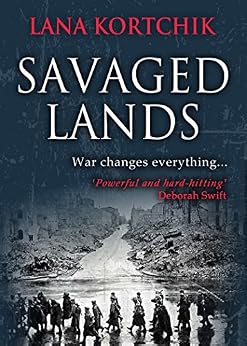
Savaged Lands

Savaged Lands. Lana Kortchik. 2016. 292 pages. [Source: Bought]

First sentence: It was a balmy September afternoon and the streets of Kiev were crowded. Just like always, cars screeched past the famous Besarabsky Market. And just like always, a stream of pedestrians engulfed the cobbled Kreshchatyk. Yet something was different. No one smiled, no one called out greetings or paused for a leisurely conversation in the shade of the many chestnut trees that lined the renowned street. On every grim face, in every mute mouth, in the way they moved – a touch faster than usual – there was anxiety, fear and unease. And only three teenagers seemed oblivious to the oddly hushed bustle around them.

Premise/plot: Natasha Smirnova's world is turned upside down by the Nazi's invasion of her hometown of Kiev in September 1941. Savaged Lands chronicles her life during the war.

My thoughts: I almost loved this one. I did. Why the almost? The love scenes were a bit too graphic for my personal taste. (I like things on the clean side). What did I love about it? The drama and intensity of it. The ugliness of war and the messiness of family life come together in this historical novel. I also thought the author did a good job creating complex characters. Not every single character perhaps. But the main characters certainly.

What did I like about it? The romance. The romance is both the novel's biggest strength and greatest weakness. It all depends on YOU the reader. If you love ROMANCE, if you love romance with DRAMA, with OBSTACLES, then you may love, love, love this one. It wouldn't be a stretch to say this one is more about a 19 year old girl falling madly, deeply in love for the first time than it is a novel about the second world war. If you love HISTORY more than romance, you might feel that too much emphasis is placed on her weak-in-the-knees, heart-pounding romance. Her life is practically unrecognizable, she's lost immediate family members, and all her thoughts are consumed in HIM. All the time it's him, him, him, HIM. (His name is Mark, I believe)

This one has plenty of tension and conflict. Is it good drama? or too melodramatic? I think again this is up to each reader. The conflict between Lisa and Natasha--two sisters--is very real and takes up a good portion of this one. Definitely gives readers something to think about as they keep turning pages.

© 2016 Becky Laney of Becky's Book Reviews

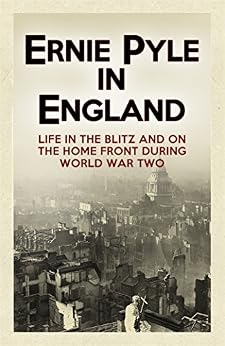
Ernie Pyle in England

Ernie Pyle in England. Ernie Pyle. 1941. 215 pages. [Source: Bought]

First sentence: A small voice came in the night and said, “Go.” And when I put it up to the boss he leaned back in his chair and said, “Go.” And when I sat alone with my so-called conscience and asked it what to do, it pointed and said, “Go.” So I’m on my way to London.

Premise/plot: Ernie Pyle in England was first published in 1941. It gathers together Ernie Pyle's newspaper columns from his time--three or so months--in England (and Ireland and Scotland). (He was an American journalist.) At the time the book was published, America had NOT yet entered the second world war.

My thoughts: WHY DID NO ONE TELL ME THIS BOOK EXISTED?! Seriously. I've gone all these years of my life not knowing about Ernie Pyle?!?!?! This one was a PERFECT fit for me. I love to read about England. (I do. I really do.) And I love to read about World War II. If you love history, this one may prove quite satisfying. And if you love human-interest stories, then this one will certainly satisfy!!!

I found it fascinating, entertaining, compelling, charming.

Quotes:
A ship carries people out of reality, into illusion. People who go away on ships are going away to better things.
Our bathtub has three faucets, one marked cold, and two marked hot. The point is that one is a little hotter than the other. I don’t know why it’s done this way. All I care about is that one or the other should give off hot water; and they really do — plenty hot. But our radiator does not have the same virtue. It is a centuries old custom not to have heat over here. All radiators are vaguely warm; none is ever hot. They have no effect at all on the room’s temperature. I’ve been cold all over the world. I’ve suffered agonies of cold in Alaska and Peru and Georgia and Maine. But I’ve never been colder than right here in this room. Actually, the temperature isn’t down to freezing. And it’s beautiful outside. Yet the chill eats into you and through you. You put on sweaters until you haven’t any more — and you get no warmer. The result is that Lait and I take turns in the bathtub, I’ll bet we’re the two most thoroughly washed caballeros in Portugal. We take at least four hot baths a day. And during the afternoon, when I’m trying to write, I have to let the hot water run over my hands about every fifteen minutes to limber them up. I’m telling the truth.
My new English friends wanted to know what America thought; and they told queer bomb stories by the dozen. “You’re a welcome sight,” they said. “We’ve all told our bomb stories to each other so many times that nobody listens any more. Now we’ve got a new audience.”
London is no more knocked out than the man who smashes a finger is dead. Daytime life in London today comes very close to being normal.
Some day when peace has returned to this odd world I want to come to London again and stand on a certain balcony on a moonlit night and look down upon the peaceful silver curve of the Thames with its dark bridges. And standing there, I want to tell somebody who has never seen it how London looked on a certain night in the holiday season of the year 1940. For on that night this old, old city was — even though I must bite my tongue in shame for saying it — the most beautiful sight I have ever seen. It was a night when London was ringed and stabbed with fire. They came just after dark, and somehow you could sense from the quick, bitter firing of the guns that there was to be no monkey business this night.
And Big Ben? Well, he’s still striking the hours. He hasn’t been touched, despite half a dozen German claims that he has been knocked down. Bombs have fallen around Trafalgar Square, yet Nelson still stands atop his great monument, and the immortal British lions, all four of them, still crouch at the base of the statue, untouched.
Londoners pray daily that a German bomb will do something about the Albert Memorial in Kensington Gardens. If you have ever seen it, you know why.
Apparently the national drink in England is a beef extract called Bovril, which is advertised everywhere, like Coca Cola at home. Yesterday I went into a snack bar for some lunch. I asked the waitress just what this Bovril stuff was, and in a cockney accent that would lay you in the aisle she said: “Why sir, it’s beef juice and it’s wonderful for you on cold days like this. It’s expensive, but it’s body-buildin’, sir, it’s very body-buildin’.” So I had a cup. It cost five cents, and you just ought to see my body being built.
If I were making this trip over again I would throw away my shirts and bring three pounds of sugar. 
You can hardly conceive of the determination of the people of England to win this war. They are ready for anything. They are ready to take further rationing cuts. They are ready to eat in groups at communal kitchens. Even the rich would quit their swanky dining rooms without much grumbling. If England loses this war it won’t be because people aren’t willing — and even ahead of the government in their eagerness — to assume a life of all-out sacrifice.
Don’t tell me the British don’t have a sense of humor. I never get tired of walking around reading the signs put up by stores that have had their windows blown out. My favorite one is at a bookstore, the front of which has been blasted clear out. The store is still doing business, and its sign says, “More Open than Usual.”
One of the few things I have found that are cheaper here than at home is a haircut. I paid only thirty cents the other day in the hotel barbershop, and since then I’ve seen haircuts advertised at fifteen cents. I’m going to get a haircut every day from now on — enough to last me for a year or two.
It was amazing and touching the way the Christmas spirit was kept up during the holidays. People banded together and got up Christmas trees, and chipped in to buy gifts all around. I visited more than thirty shelters during the holidays, and there was not a one that was not elaborately decorated.
I probably wouldn’t have slept a wink if it hadn’t been for the bathroom. I discovered it after midnight, when everybody else had gone to bed. The bathroom was about twenty feet square, and it had twin bathtubs! Yes, two big old-fashioned bathtubs sitting side by side with nothing between, just like twin beds. Twin bathtubs had never occurred to me before. But having actually seen them, my astonishment grew into approval. I said to myself, “Why not?” Think what you could do with twin bathtubs. You could give a party. You could invite the Lord Mayor in for tea and a tub. You could have a national slogan, “Two tubs in every bathroom.” The potentialities of twin bathtubs assumed gigantic proportions in my disturbed mind, and I finally fell asleep on the idea, all my fears forgotten.
It is hard for a Scotsman to go five minutes without giving something a funny twist, and it is usually a left-handed twist. All in all, I have found the Scots much more like Americans than the Englishmen are. I feel perfectly at home with them.
Pearl Hyde is head of the Coventry branch of the Women’s Voluntary Services. It was Pearl Hyde who fed and clothed and cheered and really saved the people of Coventry after the blitz. For more than a week she plowed around in the ashes of Coventry, wearing policeman’s pants. She never took off her clothes. She was so black they could hardly tell her from a Negro. Her Women’s Voluntary Services headquarters was bombed out, so she and her women moved across the street. Her own home was blown up, and even today she still sleeps in the police station. Pearl Hyde is a huge woman, tall and massive. Her black hair is cut in a boyish bob. And she has personality that sparkles with power and good nature. She is much better looking than in the film. And she is laughing all the time. She was just ready to dash off somewhere when I went in to see her, but she tarried a few minutes to tell me how good the Americans had been with donations.
It is against the law to leave a car that could be driven away by the Germans. You have to immobilize your car when you leave it, even though you might be walking only fifty feet away to ask a policeman for directions. In daytime, just locking the doors and taking the key counts as immobilization, but at night you have to take out some vital part, such as the distributor.

© 2016 Becky Laney of Becky's Book Reviews

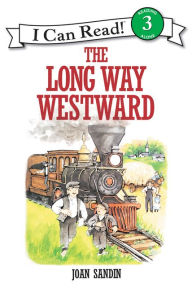
Long Way Westward

The Long Way Westward. Joan Sandin. 1989. 64 pages. [Source: Bought]

First sentence: "Look, Carl Erik," said Jonas, "the streets of America are not paved with gold."

Premise/plot: The Long Way Westward follows a Swedish immigrant family as they travel across parts of the United States to reach their new home in Minnesota. Their travel involves a lot of TRAINS. The immigrant experience of the late nineteenth century is captured quite well in this early chapter book.

My thoughts: It is so nice to have stumbled across historical fiction for the youngest of readers. Historical fiction was probably my first true genre to LOVE, LOVE, LOVE. And I think I would have really enjoyed this one if I'd read it as a kid. As an adult, I can still appreciate it and recommend it to teachers, parents, and grandparents to share with young readers in their lives.

© 2016 Becky Laney of Becky's Book Reviews

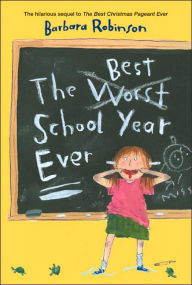
The Worst Best School Year Ever

The Best (Worst) School Year Ever. Barbara Robinson. 1994. 117 pages. [Source: Bought]

First sentence: Unless you're somebody like Huckleberry Finn, the first day of school isn't too bad.

Premise/plot: This book is a sequel to the Best Christmas Pageant Ever. Both books are narrated by a girl named Beth who bear witness to the awfulness of the Herdman family. The book loosely takes place between the first and last days of school. The chapters are more episodic than linked to one another. All focus in on the Herdman family. Some chapters are better than others. I wouldn't say that any were wonderful.

My thoughts: I really LOVE, LOVE, LOVE The Best Christmas Pageant ever. And I think the reason why was that it had a point--a redemptive point. The Herdmans surprised everyone with their humanness, and, they weren't just the town joke when all was said and done. That isn't the case with The Worst Best School Year Ever. While there was one touching moment when Beth, the narrator, noticed Imogene at her best, that alone wasn't enough to make up for all the "let's laugh at the Herdmans." The scene I did like was when Beth noticed the initials on the blanket "returned" to baby Howard. I.H. When Howard lost his blanket--he was the bald baby whose head the Herdmans tattooed with waterproof markers--Imogene gave him her old blanket and pretended it was his that she had found. Only Beth suspected the truth. The first book seemed to end with a fuzzy removal of the "us" and "them" distinction. Not so with this one. And that is disappointing.

© 2016 Becky Laney of Becky's Book Reviews

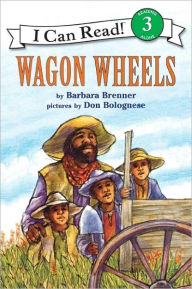
Wagon Wheels

Wagon Wheels. Barbara Brenner. Illustrated by Don Bolognese. 1978. HarperCollins. 64 pages. [Source: Bought]

First sentence: "There it is, boys" Daddy said. "Across this river is Nicodemus, Kansas. That is where we are going to build our house. There is free land for everyone here in the West. All we have to do is go and get it."

Premise/plot: Wagon Wheels is an early chapter book based on a true story. Set in the late 1870s, the book follows the adventures of the Muldie family as they settle in Kansas. First the family settles in Nicodemus, Kansas, a black community. Then the father leaves the boys behind and searches for a better place to settle down and call home, this time near Solomon City. The boys--all on their own--travel to rejoin their father. (The father disliked the flat land and missed trees and hills.)

The book is narrated by Johnny, one of four boys being raised by a widower. The text is simple, and the action is straight-forward. Though simple, it was packed with just the right amount of detail. This book is much, much shorter than any of the Little House books, but, it is just as vivid.

My thoughts: I really liked this one. The edition I picked up is all black-and-white illustrations. I could not tell based on the cover alone that it was a black pioneer family. So I was very pleasantly surprised when I started reading the text to find some diversity. The family--and the community--are saved from starvation by the generosity of Indians--Osage, I believe. Unlike the Little House books, the Indians are portrayed positively. Yes, they are referred to as "Indians" but not savages or redskins or the like.

© 2016 Becky Laney of Becky's Book Reviews

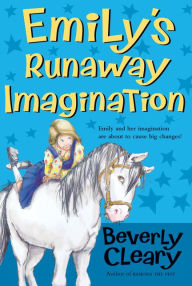
Emily's Runaway Imagination

Emily's Runaway Imagination. Beverly Cleary. 1961. 288 pages. [Source: Bought]

First sentence: The things that happened to Emily Bartlett that year!

Premise/plot: Emily Bartlett is the heroine of Beverly Cleary's Emily's Runaway Imagination. Emily has many adventures or misadventures, many of which center around the formation of the first public library in her town. I would categorize the book as historical fiction. Reference is made to a world war, and, I think it may even be the first world war. One of the adventures involves Emily's grandpa getting a car. And having a car is a novelty in their town. Most people either walk, ride horses, drive a horse and wagon.

My thoughts: I really LOVE this one. If I read this one growing up, I only read it once. It's even possible this is one we didn't own. It took me so long to get to it as an adult because the local library doesn't have a copy of it. I bought this battered copy of it at my local charity shop for a quarter.

Favorite quotes:
"There are still books left to choose from," answered Mama.
And there were! Just think of it, real library books right here in Pitchfork, Oregon. The Dutch Twins, the Tale of Jemima Puddleduck--what a tiny book that was! Emily had not known they made such little books. The Curly-Haired Hen, English Fairy Tales. But no Black Beauty. Oh, well, perhaps another time. Emily chose English Fairy Tales because it was the thickest, and Mama wrote her name on a little card that she removed from a pocket in the book. Emily now had a library book to read. (117)
"Ma'am, is it all right if I get some books for my family?" he asked.
Mama smiled at the boy. "I don't believe I have seen you in Pitchfork before. Do you live in the country?"
"No, ma'am. I live in Greenvale," he answered. "We read about the library in the Pitchfork Report and I walked down the railroad track to see if we could get some books too."
"Why, that's at least four miles," said Mama, "and four miles back again."
The boy looked at the floor. "Yes ma'am."
"Of course you may take books for your family," said Mama. This boy wanted to read. That was enough for her. It made no difference where he lived. (118)


© 2016 Becky Laney of Becky's Book Reviews

Amigo

Amigo. Byrd Baylor. Illustrated by Garth Williams. 1963. 48 pages. [Source: Bought]

First sentence: His mother said, "Come Francisco, my son. Tell me why your eyes are sad, my little one."

Premise/plot: Amigo is written in verse. It is historical fiction--about a boy longing for a dog. His family can't afford an actual dog, but, his parents encourage him to tame something wild, something that can take care of itself, something like a prairie dog. So Francisco sets out to tame a prairie dog, and, he knows just what he'll call it: Amigo. That's half the story. Amigo is a prairie dog that is curious and longs for adventures. He's drawn to humans, and he longs to tame a boy. Amigo picks out just the boy to tame, and, surprise, surprise, it's Francisco. Readers in on both sides of the stories can predict where this one is heading. It's cute.

My thoughts: I'll be honest: I bought it for the art. The illustrations are by Garth Williams. I thought if the text was nice, it would be an extra bonus. But really, I was just happy to see more of Garth Williams' work. I did enjoy the text. Do I think it's the most wonderful, amazing story ever? Probably not. I would have enjoyed more prose and less verse. But it's not awful.


© 2016 Becky Laney of Becky's Book Reviews

The Day You Were Born

The Day You Were Born. Evelyn Swetnam. Illustrated by Muriel Wood. 1971. 30 pages. [Source: Bought]

First sentence: Do you remember the day you were born? Do you remember how you felt? First, you were safe and small, growing in a special place inside your mother, and getting ready for the world. You could stand on your head in there and kick and turn and never be afraid. Sometimes you heard noises from the outside world--music, voices, a bang, or a bell. You wondered about them. But you had some more growing to do before you could find out for yourself. Soon you were ready to be born.

Premise/plot: The book chronicles a baby's first day. For the most part, I'd say it has a hospital setting. Baby is introduced to doctors, nurses, a mother, a father, etc. So many "firsts."
The nurse took you to your mother. Your mother reached out her arms and held you close. She was very happy. She undressed you, and looked at you, and played with your fingers and your toes. She hugged you and gave you a kiss. It was your first kiss. You liked it. You liked her, too.
My thoughts: I definitely had this one. I really like it. It reminds me of the beginning of Inside Out.

Text: 4 out of 5
Illustrations: 3 out of 5
Total: 7 out of 10


© 2016 Becky Laney of Becky's Book Reviews

The Crate Train

The Crate Train. Dorothy Z. Seymour. 1966. 25 pages. [Source: Bought]

First sentence: Dot and Pat played train. They played in the basement. They had some old crates. They made the train out of crates.

Premise/plot: Dot, Pat, and Baby Sam play together in the basement. Are they playing well together? Well, that's debatable. Perhaps because they are in the basement instead of upstairs, they have the freedom to argue more with each other? Each kid wants to boss the others around and dictate HOW they play train. Except for Baby Sam, I think I would get tired of Pat and Dot pretty quickly in real life.

My thoughts: This is a very, very simple book. I think the activity itself would be great fun--playing train using empty crates. Do I think reading about it is as fun as doing it? Not really.

The Crate Train is one of the books in the Early-Start Preschool Reader series. I much prefer Ann Likes Red and Ballerina Bess.

Text: 3 out of 5
Illustrations: 3 out of 5
Total: 6 out of 10
© 2016 Becky Laney of Becky's Book Reviews

Ballerina Bess

Ballerina Bess. Dorothy Jane Mills and Dorothy Z. Seymour. 1965. 25 pages. [Source: Bought]

First sentence: This is Bess. Bess wants to dance. Bess wants to be a ballerina.

Premise/plot: Young readers meet Bess who wants to be a ballerina. Ballerina Bess is from the Early-Start Preschool Reader series. It has a 25 word vocabulary.

My thoughts: I had this one and Ann Likes Red growing up. While I think I prefer Ann Likes Red a little better, this one is still a lot of fun if you like vintage children's books. (It was published in 1965.)

Simple can be a great thing when you are learning to read. Words need to be either sight words (common frequency like is, was, the, this, etc.), or easy to sound out. To read a whole book on your own can be a great confidence booster.

One thing that I just noticed now as an adult is that there are a few pages where LEGS are missing. On one page readers clearly see Bess dancing ON HER TOES. And on the very next page, Bess is missing BOTH LEGS as she's shopping at a store. The sales clerk has legs, but Bess and her mother DO NOT. And on the next page. Bess, her mom, and the sales clerk are all missing legs. But fortunately Bess' legs return for the next page when she's dancing once more.

Text: 4 out of 5
Illustrations: 3 out of 5
Total: 7 out of 10

© 2016 Becky Laney of Becky's Book Reviews

Popular Posts

Like us on Facebook

Flickr Images